‘The Neighborhood’ Star Hank Greenspan Teases Series’ ‘Bittersweet’ Ending (Exclusive)
What To Know
- Hank Greenspan, who grew up on The Neighborhood, describes the show’s ending as bittersweet, with the cast having input on the finale and feeling emotional during the last days of filming.
- The series finale will feature significant moments such as Marty and Malcolm’s weddings, tearful goodbyes, and Grover’s transition from Michigan to L.A. life, symbolizing his character’s growth.
- Greenspan credits the show’s longevity to its strong writing, supportive cast, and positive set environment, and reveals whether he will continue acting.
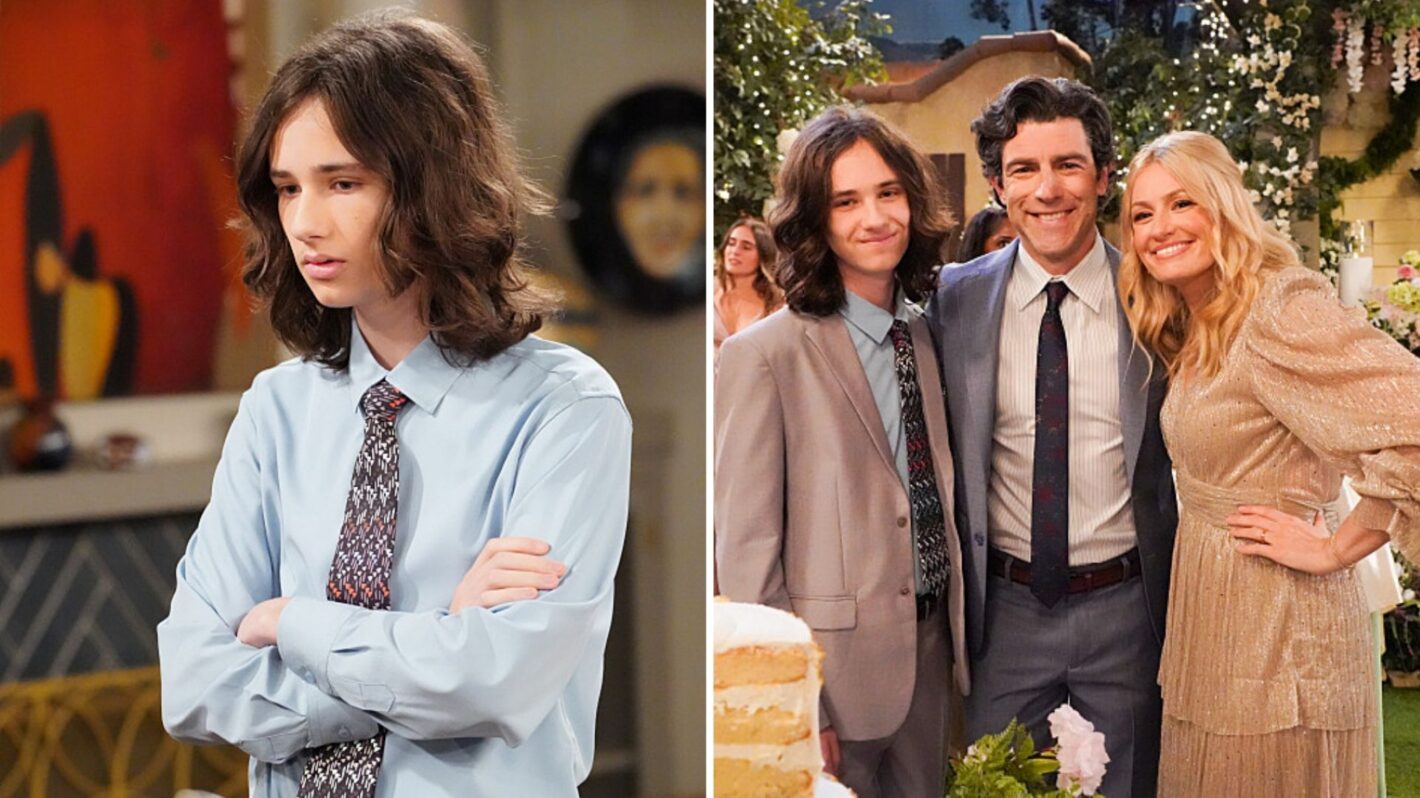
Having a show come to an end that you’ve worked on for more than half your life is definitely bittersweet. Hank Greespan, The Neighborhood‘s youngest cast member, shared what’s in store for Grover Johnson, his ending, and more.
The CBS show is set to end on Monday, May 11. With only two episodes left until the Butlers and the Johnsons say goodbye forever, Greenspan shared that the last day of filming was “bittersweet.”
“It was more bitter than sweet, really,” he said. “No one wanted The Neighborhood to end. No one was like, ‘Alright, looking forward to new opportunities.’ The industry is rough right now, so it isn’t ideal.”
“People would have wanted it to run a little bit longer, I think, but I think the ending that we did was really well written.” Greenspan also told TV Insider that the series finale was rewritten. He and his castmates had a say in how it would end after they did a table read and thought it “needed more punch.”
“That was the longest week of shooting ever,” he said. “Because it was bittersweet. It was the final run-throughs we had. It felt like you savored it more. Everyone’s going to be excited to see the ending.”
The ending will feature both Marty (Marcel Spears) and Malcolm’s (Sheaun McKinney) weddings, as well as “tearful goodbyes” and “old tensions.” But what’s in store for Grover?
Find out what else he had to say about being the only child actor on set, why The Neighborhood resonated with fans for so long, and more on his indie movie, Ethan Bloom, which is slowly rolling into theaters nationwide.

Monty Brinton/CBS
TVI: Signing on as a child, did you ever think The Neighborhood would be more than half of your life so far?
Greenspan: No. I mean, I think I didn’t even really, as a kid, I didn’t really understand what I was getting into, if that makes sense. It was hard to fully comprehend the full scale of what was happening. I was only six or seven years old, and I knew that I was on a show, but it was impossible to comprehend. I would say only about maybe in a couple of years in, did I realize millions of people watch this every day or every week. That’s a huge deal. It’s not that I didn’t know it, but it was that I couldn’t grasp it, if that makes sense.
How did you tackle being a kid, going to school, etc., and working on a major show?
Well, it was hard at first because I was still going to school at the same time as I was doing The Neighborhood for the very first year. Basically, the way we tried to work it out with my school was the idea was that I would do The Neighborhood for half of the year, and then go into public school for the rest of the year. Then, that was kind of a cluster. It didn’t really work out. There were a lot of things that weren’t matched because, with this, you work with a set teacher when you’re doing TV. All people under 17 years old need to do school with a studio teacher for at least three hours a day to fulfill the requirements. So, because my studio teacher had basically no connection with the school, there were a bunch of disconnects. There were things that they taught in the first half of the year, but I didn’t learn, so I didn’t know the fundamentals.
Also, I just don’t like going to school personally, but eventually, after that, we switched to doing online schooling, which is basically the same curriculum, but you do it from a computer, which is what I did with my studio teacher, which was a lot easier because it was more consistent. It wasn’t draining like I wasn’t ever super stressed out over my amount of work I had to do or anything, or it was never overwhelming because the nature of the show is just very calm and I worked with very nice people who respected me and it was very nice to work on that set. I never had any toxic arguments or incidents on that set.
I talked to Amber Stevens West a few weeks ago, and she said, even though she only joined this season, the one thing that made her cry the most was thinking about how much you grew up on the show. Was there anything that made you emotional about The Neighborhood ending?
I was kind of was. She’s definitely right. I was the tangible way of showing that the show has changed.I was a little, little kid when I first started, and now I’m a tall child. [laughs]. But that was probably the most common thing I got told that week was how sad it just was. Everyone would look at me and get all sad.
I don’t know the things that made me sad were probably shooting the final scene, probably the most. I think the final scene was actually the first scene of the last episode that we shot, and it was. It was also late; it was a late shooting day, and we were all pretty exhausted. Then at the end, they brought out a big cake, and everyone celebrated, and it was really sad but very, very cute, and I remember Beth [Behrs] told herself that she wouldn’t cry, but she did. I remember before the final scene that we shot, everyone was crying. I think Beth made like a bet with me on who would and wouldn’t cry. But, Beth cried at the table read and at the shooting of the actual final scene, which wasn’t the last thing we shot, but anyway, it was very cute, but I got a little choked up at the end.
Why do you think that The Neighborhood has lasted for eight seasons? What made fans resonate with it?
It’s interesting because I grew up at a time after sitcoms. A set producer, Patrick, asked me what classic sitcoms I grew up with, and I couldn’t really name any. I didn’t grow up with any classic sitcoms, or I grew up with Cartoon Network shows, like [The Amazing World of] Gumball, but that was past everyone’s time. Everyone on that set grew up with Roseanne, or they grew up with a Nickelodeon one like iCarly or Victorious, or something like that.
Sitcoms seem to resonate with people in a way that other shows can’t, just because of their nature. The characters in a sitcom become your lives, and if it’s a good sitcom, you’ll want to see what they’re going to make it out of it, and it just feels like a very cozy thing. In a world full of chaos and uncertainty, sitcoms specifically resonate with people because they are consistent, but not in a boring way, in an interesting way where you know the characters and it’ll always wrap around at the end. It’s heartwarming. It’s a sweet thing.
It’s a combination of very, very good writing and just a very, very good cast. Also, the set, I had no reference for it because it was the first set I’d ever worked on, but people who were veterans of the industry said that The Neighborhood was easily one of the best sets, if not the most fun set to be on that they’ve ever been on, just because of how everyone looks out for each other. Basically, there’s no one who gets special treatment. I just like the concept of that a lot.
There’s no, “I’m more important than you. There’s no superiority really. I have to thank Cedric [The Entertainer] for that because Cedric is the boss. So it all basically comes down from the top. I’ve heard of sets where if the person at the top is like an a**hole or something, then everyone else is kind of going to follow suit in a way because no one’s enjoying themselves and because they’re not being looked out for.
This was your first role. How did it feel to work with veteran TV actors? Did they give you any advice?
I think they did, but honestly, I can’t remember a lot of it. I’m someone who learns by observing other people and watching other people who are good at something do it, and see their mannerisms and what habits they use. So, even just being around all those brilliant, brilliant actors. It was really, really good acting training for me, and also, just get to consistently work five days a week is great practice.
I’m extremely lucky to have that because acting isn’t always consistent. I know people who go from job to job, and it’s hard to keep it consistent. That’s just the nature of the job, but I got lucky on a show that was very good and ran for a very long time, and so I got a lot of practice just doing it consistently, and also being around all those legendary actors that were on that set.

Ann Baggley
We know that Marty and Malcolm are getting married, and Dave lost his job. What can you tease about Grover’s ending?
Grover’s ending is, if there are only three episodes left, they plant the seeds for what his ending is going to be early on in a couple of episodes before. It’s basically grounding him as his metamorphosis from being a Kalamazoo kid to basically becoming an L.A. kid.
I remember midway through the show, the wardrobe people told us they were changing it. We noticed it, and then we asked them about it, and they confirmed it that they were changing the way Grover dressed. They were making him wear less sort of kiddie striped shirts, and more flannels, more sweatpants. The last couple of seasons, the wardrobe people knocked it out of the park for me. I thought I was fly. They basically dressed him more so to symbolize the idea that he’s being integrated into L.A. culture and so the last episode is going to test his medal, in a way, on how on the two parts of him that are from Michigan and from LA because it’s he spent the first half of his life in Michigan, but I think the most formative years have been spent in Pasadena.
Now that The Neighborhood is over, are you focusing on high school or seeking out more projects?
My current plan is to pursue acting, actually. I turned 16 this year, so it’s around the time I’ll start looking at college. There are a lot of child actors who do one show, then they realize they don’t like acting, like, “This isn’t for me.”
Even if they are a great actor, there are plenty of great actors who don’t enjoy it. They’ll usually get into something like writing or directing. I still enjoy acting a lot. I still really like it, and that’s what I want to keep doing for the foreseeable future. I’m applying to dramatic arts school and ones like Juilliard or the National Theatre School of Canada.
In Ethan Bloom, you weren’t the only teenage actor on set. Did working around people your age make you feel more comfortable? Do you learn more from adults? What are the differences in working with adults and teens?
I think that it was actually that’s a good question. It was about the same, to be honest, because I think I remember on The Neighborhood at times, part of the challenge was being the only kid on the show. I didn’t really have like someone to hang out with.
All those people on the cast and on set, we are great friends, but they’re twice my age, so most of them, I didn’t hang out with. That’s actually not true. Some of us have, my family and Michael, our studio teacher, have gotten pretty close, and we’re basically family friends now. My grandma and his mom are really good friends now.
But, I think when you’re an actor, being a kid, you have to be an adult, if you’re an actor, even if you are not an adult, because you have to have the responsibilities of having a job. It’s the same as showing up to work and being responsible for your actions, and being on time. Obviously, you have parents there, you have guardians who can look out for you. But you have to be responsible.
That’s why kids are hard to work with a lot of the time. That’s why people don’t like working with kids, because, I mean, this isn’t their fault. They’re children. Most kids shouldn’t be expected to have a job, but I think working with other kids was nice because we did get to have that sort of camaraderie. When the adults sat at the hotel bar, the kids huddled in one room, and that was kind of nice.
What was it like being the main focus and being on screen for 95% of the time, compared to The Neighborhood, where the show isn’t focused on you all of the time?
It was extremely challenging, and there was a noticeable difference. Not only was I the main character on Ethan Bloom, but The Neighborhood is shot with a pretty large budget. It’s on a sound stage. There’s no third party.
You don’t have to compromise on The Neighborhood, really, for anything because you always have a camera following you. There’s always a microphone above you. You’re on a set. You’re on location.
So, that was a big difference, especially because on Ethan Bloom, if one person is stressed out, it trickles down to everyone. There was a neighbor running a lawnmower in the middle of shooting, and the director basically jumped over the fence, and I didn’t see what happened, but the lawnmower stopped running after that. Planes would come overhead, and there were way more lines.
You had to be on time basically because in an indie movie, you’re also working with effectively borrowed time. You only have a limited amount of time on each set, and you can’t just keep shooting until you get it. Basically, if you don’t get it, then it’s going to fail. It’s a bunch of people moving in a line. If one person stops, everyone behind them is also going to have to stop.
Ethan Bloom was playing in festivals, but now it’s coming to theaters. Will it be released nationwide soon?
Yes, it’s in theaters locally in South Florida and all around Delray. I know I did a couple of Q&As at the movies in Delray. So if you’re in Florida, you can probably find it, but it will be moving across the U.S. We’ve seen a bunch of demand for indie movies like Ethan Bloom. They sink or swim based on word of mouth. So, all the Q &A’s we did every single time, we got asked at least once, “When is this coming to New York? When is this coming to LA? When is this coming to whatever city?” And it will. It’s mostly just reliant on whether people want it to be there.
The Neighborhood, Mondays, 8/7c, CBS
Ethan Bloom, Opening in theaters nationwide, 2026
Read the original article here